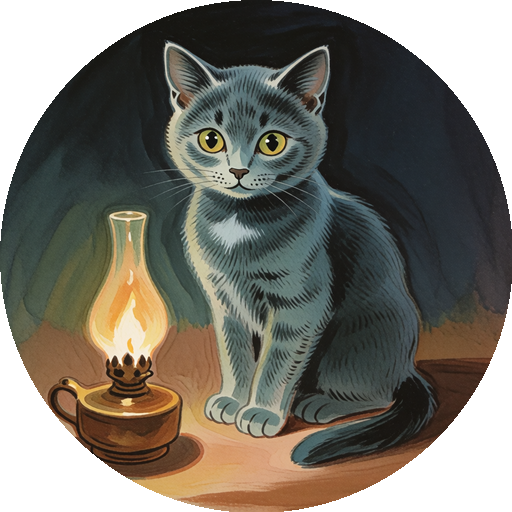
Why we began with a forgotten blue cat
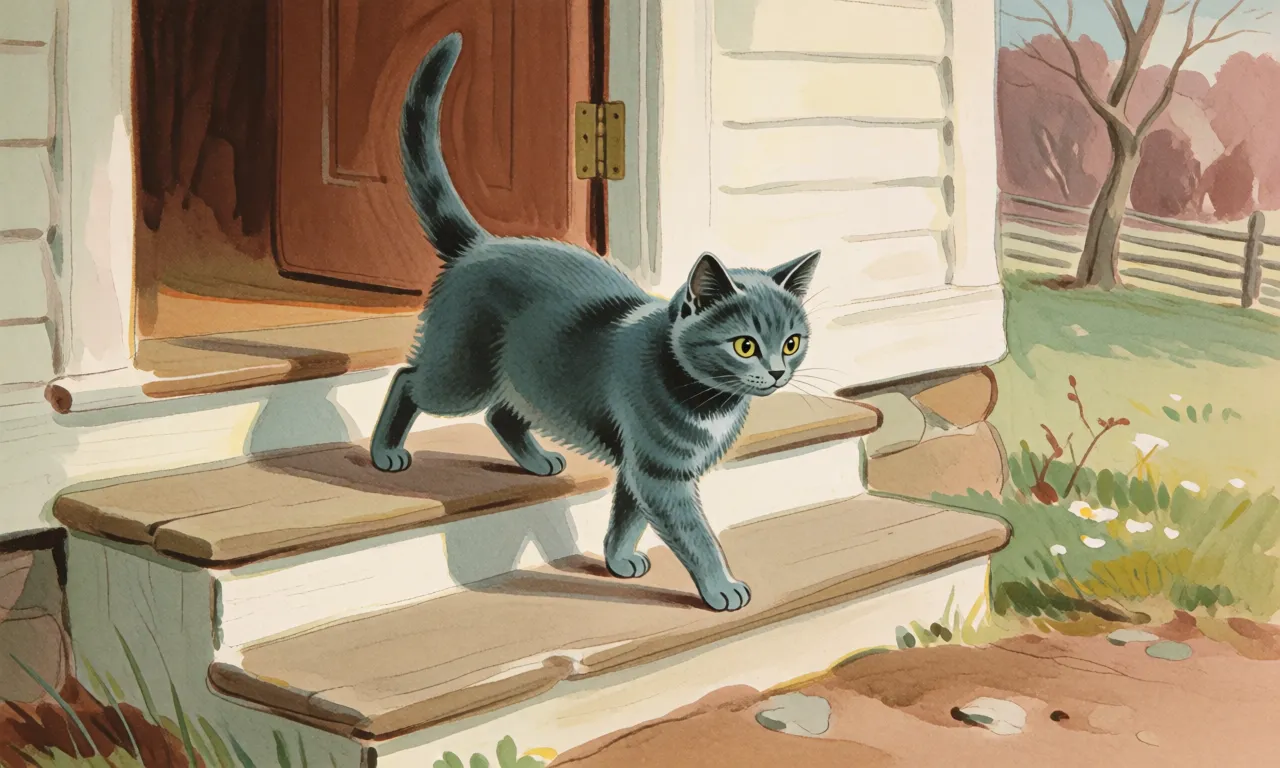
Our first book is one almost nobody remembers — and yet its blue cat hangs in the Metropolitan Museum of Art. Here is why we chose it to light the lamp.
When you open a library, the very first book you choose is a kind of promise about the library you mean to build. We could have started with something safe — a title every parent already knows by heart. Instead we started with a book almost nobody remembers, about a small blue cat trying to find where he belongs. Here is why.
A book famous for being forgotten
The Blue Cat of Castle Town was written by Catherine Cate Coblentz and published in 1949. The next year it was named a Newbery Honor book — one of the highest distinctions in American children’s literature. And then, quietly, it went out of print and slipped from memory, the way good books sometimes do when there’s no movie or franchise to keep them lit.
So it has a peculiar kind of fame now: it is the book people rediscover and can’t believe they never read. Among librarians and collectors of old children’s books there’s a soft, stubborn devotion to it — the sense that something lovely was mislaid. A book like that is exactly what Lamplight Library exists to carry a light back to.
A small cat and a large question
On its surface the story is simple and very sweet. A blue kitten is born under a blue moon in a Vermont meadow, “at the end of the first third of the nineteenth century.” An old wisdom says that a blue cat, if he’s willing, can learn the river’s song — a song of beauty, peace, and content — and win a hearth of his own to sit beside. But there’s a hard condition attached: he must not only find that hearth, he must teach the person who keeps it to sing the same song. Do that, and he will live forever.
So the kitten sets out, “like a knight, a small knight sent forth on a quest, armed only with a song.” What follows is his search for his place in the world. He meets the people of Castle Town one at a time — a pewterer, a weaver, a carpenter — and finds each of them chasing something: money, fame, permanence, beauty. Overshadowing them all is a man named Arunah Hyde, weaving a “dark spell” out of greed for gold and power. Watching, the little cat slowly works out the oldest difference there is: between the people who are at peace and the people who are not.
It’s a book about learning to be content without becoming small — about finding where you belong, rather than where you’ve been told you ought to want to be. Read to a child, it lands gently. Read as an adult, it lands harder than you expect.
The part that makes it unforgettable
The cat is turned away, over and over, until he ends up in a cold barn belonging to Sylvanus Guernsey, and there he meets the farmer’s daughter, Zeruah — lonely, convinced she is ugly, certain no one will ever love her. “I am so lonely,” she sobs into the grass. “And I am so ugly. No one will ever look at me, blue cat.” He climbs into her lap and begins, at last, to sing. The misfit cat and the misfit girl find, in each other, the hearth they were both looking for.
And then Zeruah makes something. She shears the wool from a sheep’s back, spins it on a wheel her father built, and over two or three years embroiders an enormous carpet — dozens of squares, each one different, flowers and birds and leaves. Into one square she stitches a small blue cat.
Here is the device Coblentz built the whole book around. Castleton is a real town. The pewterer, the carpenter, the lonely girl — they were real people, and she used their real names. She described her own book with a paradox that has stayed with us ever since:
Every word in the book is true, and there isn’t a word of truth in it.
The blue cat is real — and it’s in the Met
In 1946 Coblentz visited Castleton, and a librarian named Hulda Cole told her about a young woman, Zeruah Higley Guernsey, who around 1835 had embroidered a carpet with a blue cat in it. That carpet survives. It hangs today in the Metropolitan Museum of Art in New York, signed with Zeruah’s initials and the date. You can go and stand in front of it, and in one corner of a farm girl’s two-hundred-year-old handwork there is a small blue cat, looking back at you, with no explanation.
Coblentz saw that cat and wondered how it got there — and then wrote the story that explains it. The book even ends by dissolving into fact, telling the reader plainly:
The carpet which Zeruah Guernsey fashioned, together with the hearth rug of the blue cat, hangs in the Metropolitan Museum of the City of New York.
A forgotten folk-art carpet inspired a Newbery book; the Newbery book imagines the life of the very cat woven into the carpet; and both point you back to a real thing you can still go and see. The invented story and the real object hold each other up.
Why it’s our first
We wanted to open Lamplight Library with a story about finding your place — because that’s what a new imprint is quietly doing, and because it’s the thing children most need told to them gently and often. A small blue cat looking for a hearth of his own, who ends up giving a lonely girl a reason to make something beautiful, turned out to be the truest way we could say what we’re here to do.
We hope you’ll watch along, or better yet, read it aloud to a child. That’s what it was made for.
If you’d like a first glimpse, here is the trailer:
You can also watch the trailer on YouTube — and subscribe there to catch each chapter as it arrives.